The trial may be the most visible stage of a business lawsuit, but it is rarely where the case is built. By the time the first witness testifies, much of the most important work has already taken place. The evidence has been gathered, the legal issues have been refined, the witnesses have been evaluated, and each side usually has a clearer understanding of the case’s strengths and weaknesses. That is why effective trial preparation begins long before anyone enters the courtroom. In business litigation, each strategic decision made along the way can shape how the case is ultimately presented.
Each Stage of Litigation Serves a Purpose
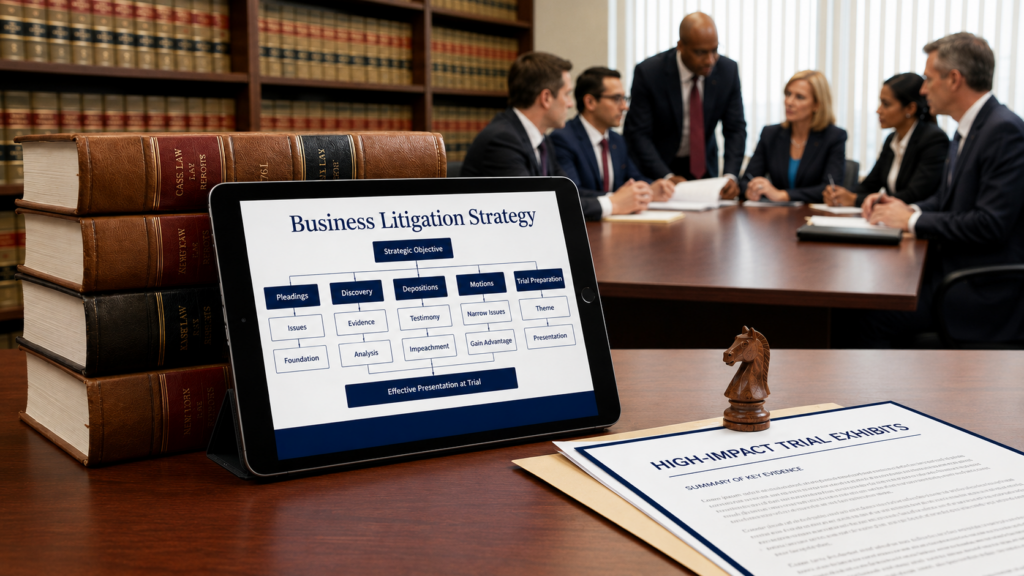
A business lawsuit is not a series of isolated events. Each stage serves a specific function while contributing to the eventual trial presentation. The pleadings define the claims, defenses, and issues in dispute. Discovery develops the factual record through contracts, emails, financial records, business communications, internal documents, and other evidence. Depositions allow attorneys to evaluate witnesses, preserve testimony, test credibility, and identify inconsistencies. Motion practice may narrow the claims, resolve legal issues, exclude improper evidence, or even dispose of part or all of the case before trial.
Throughout the litigation, attorneys continually assess the record, evaluate risk, and refine strategy. By the time the trial begins, the foundation of the case has usually been built over months, and sometimes years, of disciplined preparation.
Discovery Shapes the Evidence
Discovery is one of the most important phases of commercial litigation because it creates the evidentiary record on which the case may ultimately depend. In a business dispute, that evidence may include contracts, invoices, payment records, profit-and-loss statements, emails, text messages, shareholder communications, partnership records, vendor files, customer communications, board materials, or internal policies. These materials can help establish what the parties agreed to, how they performed, what damages were suffered, and whether a party’s conduct was consistent with its legal obligations.
Depositions are equally important. They allow attorneys to question witnesses under oath, evaluate how they may testify at trial, preserve key admissions, and expose inconsistencies between testimony and documents. A single document, a witness’s admission, or an inconsistency can significantly affect the direction of the case long before trial begins.
Trial Preparation Extends Beyond the Evidence
Preparing a business case for trial involves far more than organizing exhibits. Attorneys must research legal issues, evaluate evidentiary problems, prepare witnesses, develop direct and cross-examinations, draft motions in limine, identify objections, organize exhibits, prepare demonstratives when appropriate, and anticipate the opposing party’s arguments.
Much of this work occurs outside the client’s immediate view, but it can have a major impact on how effectively the case is presented. A persuasive opening statement, a focused cross-examination, or a clear damages presentation is rarely the product of last-minute preparation. It usually reflects strategic choices made throughout the litigation.
Trial Is the Presentation, Not the Starting Point
One common misconception about commercial litigation is that the trial is where the case truly comes together. In reality, the trial is where the work performed throughout the lawsuit is presented to the judge or jury. The documents selected for exhibits, the testimony developed in depositions, the legal issues narrowed through motion practice, and the strategic decisions made during discovery all shape the final presentation. By the time the trial begins, the strongest arguments should already be supported by the record, and the weaknesses should already be understood and addressed.
Strong Business Litigation Requires Early Strategic Preparation
Successful commercial litigation is shaped by the preparation that occurs before trial ever begins. Every document reviewed, every deposition conducted, every motion filed, and every strategic decision made can influence how the case is ultimately presented.
At Alisme Law, we approach business disputes with the understanding that early decisions can shape the eventual trial presentation. From the outset, we work to develop the evidence, refine the legal issues, evaluate risk, and prepare strategically for each stage of litigation. If your business is involved in a contract dispute, partnership conflict, shareholder disagreement, or other commercial litigation matter, contact us to schedule a confidential case evaluation: 917-540-8432.
This article is for informational purposes only and does not constitute legal advice.