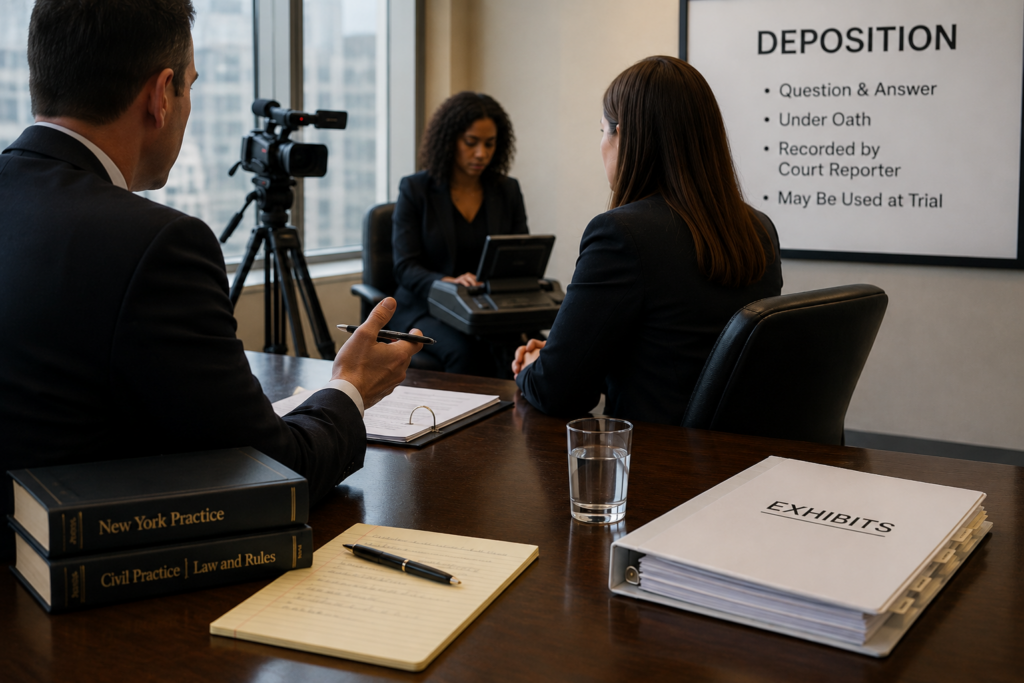
A deposition is more than a question-and-answer session. In many business disputes, it is one of the most important moments in the case.
When business owners think about litigation, they often picture a courtroom, a judge, or a jury. Some of the most significant testimony is given long before trial during a deposition. A deposition allows attorneys to question parties and witnesses under oath, create a formal record of the testimony, and test how a witness explains key events, documents, and decisions. That testimony may shape litigation strategy, affect settlement negotiations, support or undermine motion practice, and become powerful evidence if the case proceeds to trial.
Understanding how depositions work can help business owners approach this stage of litigation with greater confidence and avoid mistakes that can have lasting consequences.
What Is the Purpose of a Deposition?
A deposition is part of the discovery process, where each side gathers information and preserves testimony before trial. Attorneys use depositions to learn what a witness knows, understand the factual basis for claims and defenses, evaluate credibility, test explanations against the documents, and identify strengths and weaknesses in the case.
Depositions also allow attorneys to explore issues undeveloped in written discovery. In a business dispute, that may include negotiations, internal decision-making, financial transactions, contract performance, communications among owners, or the reasons behind disputed business decisions. In many cases, a witness’s deposition becomes one of the most important pieces of evidence in the litigation.
Preparing for a Deposition
Preparation is essential to giving effective testimony, but preparation is not about memorizing answers or trying to outmaneuver opposing counsel. It is about understanding the facts, reviewing the key documents, becoming familiar with the issues in dispute, and knowing how the deposition process works.
Your attorney should explain the purpose of the deposition, identify the likely areas of questioning, review the documents you may be asked about, and help you understand how your testimony fits into the broader litigation strategy. A well-prepared witness is generally better able to listen carefully, answer accurately, remain composed, and avoid preventable mistakes.
Common Mistakes to Avoid
One of the most common mistakes witnesses make is giving more information than the question calls for. A deposition is designed to answer questions under oath, not to persuade opposing counsel or deliver a speech. The most effective testimony is truthful, careful, and responsive to the question asked. Witnesses should avoid guessing, speculating, volunteering unnecessary details, interrupting the examining attorney, or becoming argumentative when faced with difficult questions. It is also important to take the time to understand the question before answering.
If you do not understand a question, ask for clarification. If you do not know the answer, say so. If you do not remember, it is appropriate to say that as well. Honest testimony is far more effective than trying to fill gaps with assumptions or trying to sound certain when you are not.
How Deposition Testimony Is Used
A deposition does not end when the questioning ends. The parties may use the transcript later during settlement negotiations, motion practice, witness preparation, and trial. If a witness later gives testimony that differs from the deposition, opposing counsel may use the transcript to challenge credibility. Deposition testimony may also influence how attorneys assess risk, value the case, prepare for summary judgment, or decide whether additional discovery is necessary. Because the testimony is given under oath, it often becomes a central part of the evidentiary record.
Why Credibility Matters
Business disputes often involve competing versions of the same events. Documents may provide key evidence, but witnesses often supply the context needed to explain negotiations, decisions, approvals, and communications. A witness who answers honestly, carefully, and consistently is generally more credible than one who appears evasive, defensive, overly certain, or inconsistent with the documents. Credibility is not built by having an answer to every question. It is built by providing truthful, reliable, and disciplined testimony.
An Effective Deposition Can Shape the Outcome of a Business Dispute
Depositions are far more than a procedural formality. They allow attorneys to evaluate witnesses, develop the factual record, test the other side’s positions, and refine the strategy that will guide the remainder of the case.
At Alisme Law, we represent businesses, shareholders, partners, and executives in complex business disputes throughout New York. We thoroughly prepare our clients for depositions and conduct strategic examinations designed to uncover the facts that matter most. Whether a case resolves through negotiation, motion practice, settlement, or trial, effective deposition preparation is essential to protecting our clients’ interests.
Contact us to schedule a confidential case evaluation at 917-540-8432.
This article is for informational purposes only and does not constitute legal advice.