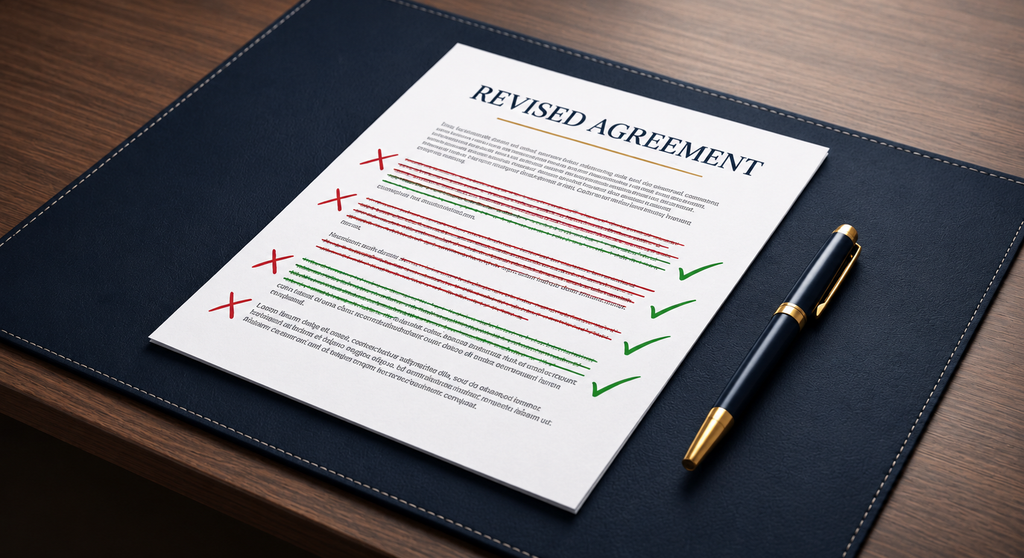
Your business agrees with a customer, vendor, or contractor. The parties agree on pricing, payment deadlines, and the work to be performed. Your company begins fulfilling its obligations, expecting the other side to honor the arrangement. Then the terms suddenly change. The customer demands additional services without increasing payment. A vendor raises its prices midway through the agreement. A contractor changes the delivery schedule or insists on conditions that were never part of the original deal.
Can the other party change your business agreement without your consent? Under New York law, one party generally cannot unilaterally modify an enforceable contract. However, whether a change becomes binding depends on the agreement’s language, the parties’ conduct, and the legal requirements governing contract modifications.
One Party Generally Cannot Change a Contract Unilaterally
A contract establishes obligations that the parties have agreed to undertake. Once those obligations become enforceable, one party generally cannot impose new terms simply because the original agreement is no longer convenient or profitable. For example, suppose a company enters into a $500,000 services agreement. Midway through the project, the customer demands substantial additional work without increasing compensation. Unless the contract authorizes those changes or the parties validly modify their agreement, the customer generally cannot impose the additional obligations unilaterally.
The Contract May Allow Certain Changes
Some commercial agreements expressly permit adjustments to pricing, delivery schedules, or performance requirements. A supply agreement may authorize price increases based on market conditions, while a construction contract may establish procedures for approving additional work. Whether those changes are enforceable depends on the contract language and whether the party making the change complied with the agreement’s requirements. A dispute may arise when one party exceeds its authority, fails to provide required notice, or attempts to impose changes the contract does not permit.
Oral Agreements and Emails May Modify Contractual Obligations
Business owners sometimes assume a contract can be modified only through a formal written amendment. However, New York law may recognize modifications established through oral agreements, electronic communications, or the parties’ conduct. New York law generally restricts oral modifications when a signed written agreement expressly requires changes to be in writing. Certain exceptions involving partial performance or equitable estoppel may apply. Emails and other electronic communications may also satisfy applicable writing requirements depending on their content and authentication. The central question is whether the parties validly agreed to change their contractual obligations, rather than whether one party merely proposed different terms.
The Parties’ Conduct May Affect Their Contractual Rights
Sometimes businesses operate under different terms without formally amending their agreements. A customer may repeatedly make late payments that a vendor accepts without objection, or a contractor may perform additional work under revised arrangements.
Depending on the circumstances, this conduct may support an argument that the parties modified their agreement or waived certain contractual rights. However, accepting a deviation does not automatically establish a permanent modification. Courts may examine the agreement’s language, the parties’ communications, and whether their conduct demonstrates an intentional relinquishment of contractual rights.
Refusing New Terms Does Not Necessarily Constitute a Breach
A business generally does not breach an agreement simply by refusing to accept new obligations that the existing contract does not authorize. For example, a vendor may demand a substantial price increase before delivering products at the agreed price. If the contract does not permit that adjustment, the customer may have grounds to insist on performance under the original terms.
However, businesses should be cautious before suspending performance or terminating the agreement. Whether those actions are justified depends on the contract and whether the other party’s conduct constitutes an actual or anticipatory breach. An improper response could expose the business to its own contractual liability.
Evidence Can Establish What the Parties Actually Agreed To
Disputes over contract modifications frequently involve conflicting accounts of what the parties discussed and accepted. The original agreement, amendments, emails, text messages, invoices, payment records, and subsequent conduct may help establish whether an enforceable modification occurred.
For example, a customer may claim that a vendor agreed to permanently reduce its prices, while the vendor maintains that it offered only a temporary discount. Communications describing the adjustment and its duration may become critical evidence. Preserving these records can help establish the parties’ actual obligations and whether either side breached the agreement.
Litigation May Be Necessary to Enforce the Agreement
When one party insists on unauthorized changes and refuses to honor the existing agreement, litigation may be necessary to protect the other party’s contractual rights. A court may need to determine whether the original contract authorized the disputed change, whether the parties entered into a valid modification, and whether either party breached its obligations.
Depending on the circumstances, the injured business may pursue damages or other available remedies. These disputes can become particularly significant when the proposed changes affect substantial financial obligations, ongoing commercial relationships, or the business’s ability to complete its own contractual commitments.
Your Business Does Not Have to Accept Every Proposed Change
Businesses may renegotiate their agreements as circumstances evolve. But renegotiation differs from one party trying to impose new obligations without the other’s consent. When a customer, vendor, or contractor changes the terms of an existing agreement, the key questions are whether the contract permits the change, whether the parties validly agreed to modify their obligations, and whether refusing to honor the original terms constitutes a breach.
Alisme Law represents business owners and companies in breach-of-contract disputes, contract enforcement actions, and commercial litigation throughout New York. We help businesses evaluate disputed contract modifications, enforce contractual obligations, and pursue resolutions that protect their legal and financial interests.
Contact us to schedule a confidential case evaluation at 917-540-8432.
This article is for informational purposes only and does not constitute legal advice.