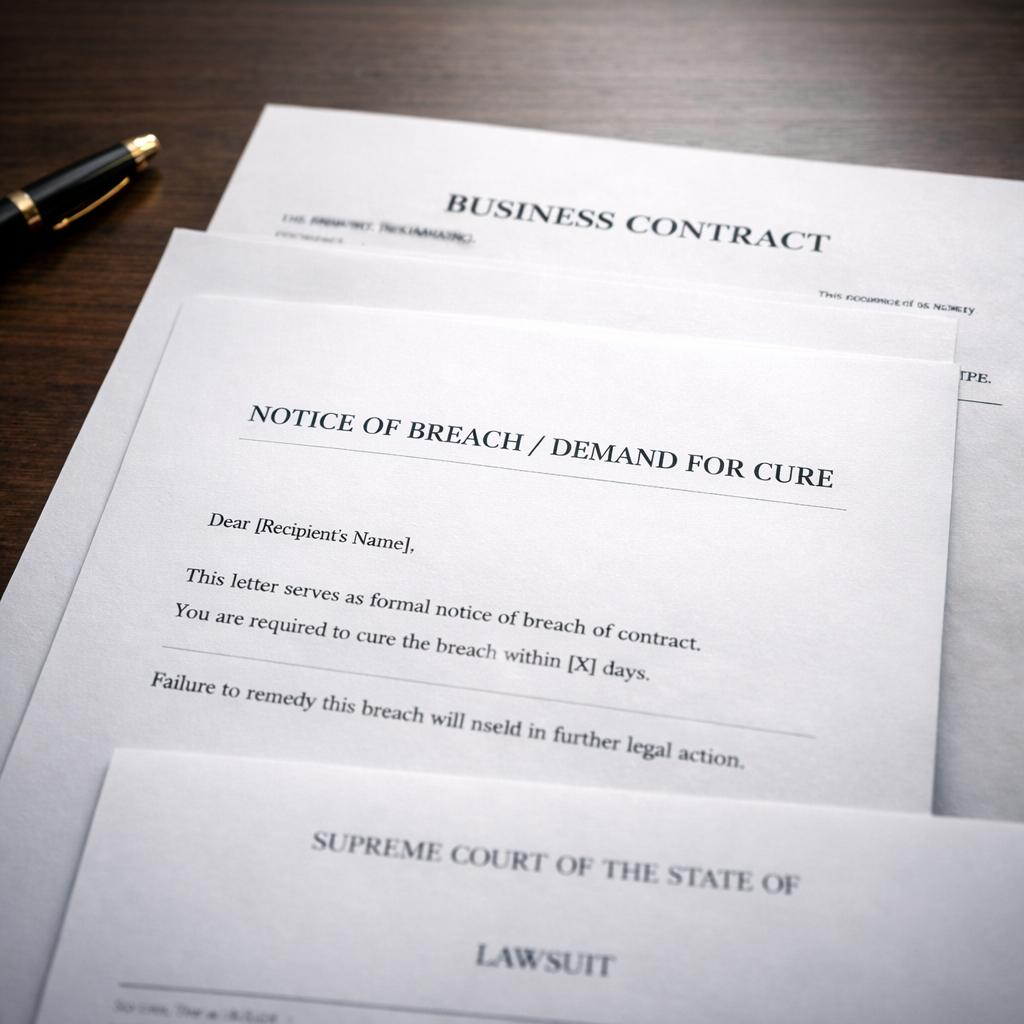
In many business lawsuits, the real fight is not whether one party breached the contract, but who breached it first. Breach-of-contract lawsuits are not always as simple as one party failing to perform and the other suing. In many commercial disputes, both sides accuse the other of violating the agreement. A customer may claim that a vendor failed to deliver what it promised, while the vendor argues that the customer stopped making required payments first. A contractor may contend that it stopped work because the owner failed to pay, while the owner claims it withheld payment because the contractor had already fallen substantially behind schedule.
In these cases, the dispute can become a battle over chronology. What happened first? Was the first violation significant enough to justify the other party’s response? Did the nonbreaching party comply with any required notice or cure provisions? Did the alleged first breach excuse the performance that followed? Answering those questions can determine which party is ultimately responsible for the breakdown of the contractual relationship.
The First Breach Is Not Necessarily the Most Important Breach
When both sides fail to comply with the contract, identifying the first deviation from the agreement may matter, but timing alone does not necessarily resolve the dispute. The nature and significance of the breach can matter as much as when it occurred.
Suppose a customer pays three days late. Two weeks later, the vendor stops providing the core services required under a year-long agreement. The vendor may argue that the customer breached first because the payment was late. The customer may respond that a short payment delay did not justify abandoning the contract.
The dispute may therefore turn on whether the earlier breach was material. A relatively minor contractual violation may support a claim for damages without necessarily excusing the other party from continuing to perform. A material breach, by contrast, may be significant enough to excuse further performance by the nonbreaching party.
Chronology Can Become Critical
When each side claims the other breached first, establishing a detailed timeline can become one of the most important parts of the case. The parties may agree several problems occurred but disagree about their sequence, significance, or cause.
Emails, text messages, invoices, payment records, delivery confirmations, project-management records, meeting notes, and other contemporaneous documents can help establish that chronology. For example, a vendor may claim that it stopped work only after months of unpaid invoices. The customer may produce emails showing that it withheld payment after repeatedly complaining to the other side that required work had not been completed.
The sequence of those communications can significantly affect how the dispute is evaluated. A document created while the parties were still doing business together may also carry substantial weight because it can show what each side was saying about performance before litigation began.
The Contract May Determine What Had to Happen Next
Even if one party materially breached first, the contract may require the other side to take certain steps before suspending performance or terminating the agreement. As discussed in earlier articles in this series, commercial agreements often include notice provisions, cure periods, and procedures governing defaults and termination.
Suppose a contract requires written notice and 30 days to cure a default. One party may have committed the initial breach, but if the other immediately terminates without providing the required notice, the litigation can become more complicated. The first party may argue that it was never given the contractual opportunity to correct the problem and that the termination itself constituted a separate breach. This is why identifying who breached first is only part of the analysis. The parties’ rights and obligations after that breach can be equally important.
Performance Records Can Show Who Was Meeting Their Obligations
The strongest evidence in a competing-breach case is often created before anyone expects litigation. Invoices can establish whether a party paid and when. Delivery records can show whether goods arrived on schedule. Project-management systems can document missed milestones or incomplete work. Emails may show repeated complaints about performance. Financial records may establish amounts that remained unpaid. Internal records may reveal when a company decided to suspend performance and why.
These records can help distinguish between a party that stopped performing in response to a genuine contractual failure and one that later identified an alleged breach to justify its own conduct. That distinction can matter most when the parties tell very different stories after the relationship ends.
One Party’s Breach May Have Caused the Other Party’s Nonperformance
Competing breach claims can also involve causation. Sometimes one party’s failure makes it difficult or impossible for the other side to perform. A customer may fail to provide information a consultant needs to complete a project, an owner may deny a contractor access to a worksite and later complain that the contractor missed the completion deadline, or a supplier may fail to deliver a critical component and then accuse the buyer of failing to meet production requirements.
In those situations, simply pointing to a missed contractual obligation may not tell the entire story. The court may need to determine whether one party’s conduct caused or contributed to the other party’s inability to perform. The contract, communications between the parties, and evidence concerning how the work was actually supposed to proceed can all become important.
Competing Claims Can Lead to Counterclaims
When both parties believe the other breached the agreement, litigation often involves claims going both ways. A business that files a breach-of-contract lawsuit may find itself defending a counterclaim alleging that it was actually responsible for the breakdown of the relationship.
The damages each side claims may also be substantial. One party may seek unpaid invoices while the other seeks the cost of replacing the vendor. One may seek amounts due for completed work while the other claims lost profits caused by delays. Each side may also rely on contractual provisions concerning limitations of liability, indemnification, or attorneys’ fees. The case can therefore become less about proving that something went wrong and more about establishing why it went wrong, who was legally responsible, and what financial consequences followed.
Communications After the Dispute Begins Matter
What a business says after a performance problem arises can affect the litigation that follows. A party that believes the other side is in breach should be careful about communications explaining why it is withholding payment, suspending performance, demanding a cure, or considering termination. A clear contemporaneous record can help establish the company’s position. Inconsistent explanations can create problems. If a company initially states that it is terminating because of one issue but later relies on a different alleged breach after litigation begins, the opposing party may use that inconsistency to challenge its position.
This does not mean every business disagreement should immediately become a legal notice. But once a contractual relationship is seriously deteriorating, approach communications with the understanding that they may later become evidence.
Building the Timeline Before Filing a Contract Claim
Before filing a breach-of-contract lawsuit, a business should understand not only the other party’s alleged failures but also its own performance under the agreement. That means examining the entire relationship rather than focusing exclusively on the conduct that ultimately caused the dispute to escalate.
The contract, amendments, invoices, notices, emails, text messages, payment history, performance records, and termination communications can help establish what each party was required to do and when. They can also identify potential weaknesses before the opposing party raises them as defenses or counterclaims. That analysis can affect the claims asserted, the damages sought, settlement strategy, and how the case is ultimately presented.
When Both Sides Say the Other Breached First
When both sides accuse each other of breach, the question is rarely resolved by simply identifying the earliest contractual misstep. The more important analysis may involve whether that breach was material, whether it caused or excused subsequent nonperformance, whether the parties followed contractual notice and cure requirements, and what the evidence shows about the sequence of events.
At Alisme Law, we represent businesses in breach-of-contract and commercial litigation throughout New York. When both sides blame the other for the breakdown of a commercial relationship, we help our clients reconstruct the chronology, evaluate the competing breach claims, develop the evidentiary record, and build a litigation strategy designed to protect their business interests.
Contact us to schedule a confidential case evaluation at 917-540-8432.
This article is for informational purposes only and does not constitute legal advice.